
Early Interventions to Support Trajectories for healthy lifE in India: The EINSTEIN Study
0Final Enrolment |
0Total babies Born |
||
0Biological Samples Collected |
 The health and economic burden of non-communicable diseases is increasing rapidly globally and falls disproportionally on low- and middle-income countries (LMICs).
Key Facts
- Diabetes: In India, 65 million people have diabetes and 77 million are pre-diabetic. Unchecked, the population with diabetes is expected to reach 109 million by 2035.
- Cardiometabolic and Mental Health: 13% of young people aged 1–16 years in India experience mental health disorders.
- Undernutrition in Children (under 5): The prevalence of stunting is 48%; wasting 20%; underweight 43%; and anaemia 69%.
- Undernutrition in Women (15–49 years): 33% are underweight while 55% are anaemic.
- Low Birth Weight: Approximately 25% of babies born in India each year have low birth weight.
- Obesity: Rates are increasing with 19% of children and adolescents and 15% of women of reproductive age being overweight or obese.
HeLTI India - The EINSTEIN Study
The HeLTI research hypothesis is that integrated interventions administered pre-conceptionally and at appropriate points across the life-course (pregnancy, infancy and childhood) will reduce childhood adiposity, improve cardiovascular and metabolic health, and improve child neurodevelopmental outcomes. The EINSTEIN study is a community-based, cluster randomized intervention with three arms (pre-conception, pregnancy and control) set in rural Mysore, South India, with individual villages forming the basis for the cluster. Women of reproductive age receive a longitudinal multi-faceted intervention delivered by community health workers comprising of:
a) multiple micronutrients;
b) a group parenting program to address maternal depression and improve child development;
c) hygiene and infection prevention measures;
d) reduction of environmental pollution exposure. Interventions are underpinned by a lifestyle behaviour change strategy.
The primary outcome is adiposity in children at 5 years of age measured by fat mass index. Other key outcomes at 5 years include: overweight and obesity, glucose metabolism, blood pressure, and infant/child neurodevelopmental outcomes. In addition, the study tracks a host of intermediate and process outcomes, as well as the efficacy, cost-effectiveness, and acceptability of the intervention package, compared with standard care. The study reports on the relative costs and benefits of commencing the intervention in early pregnancy compared with the preconception period.
Study Characteristics
- Study setting: Mysore, South India
- Randomization: Cluster (villages comprise the clusters)
- Trial Formative Research Started: June 2018
- Date Enrolment Started (main trial): February 2021
- Expected Completion of Trial: 2029
Location
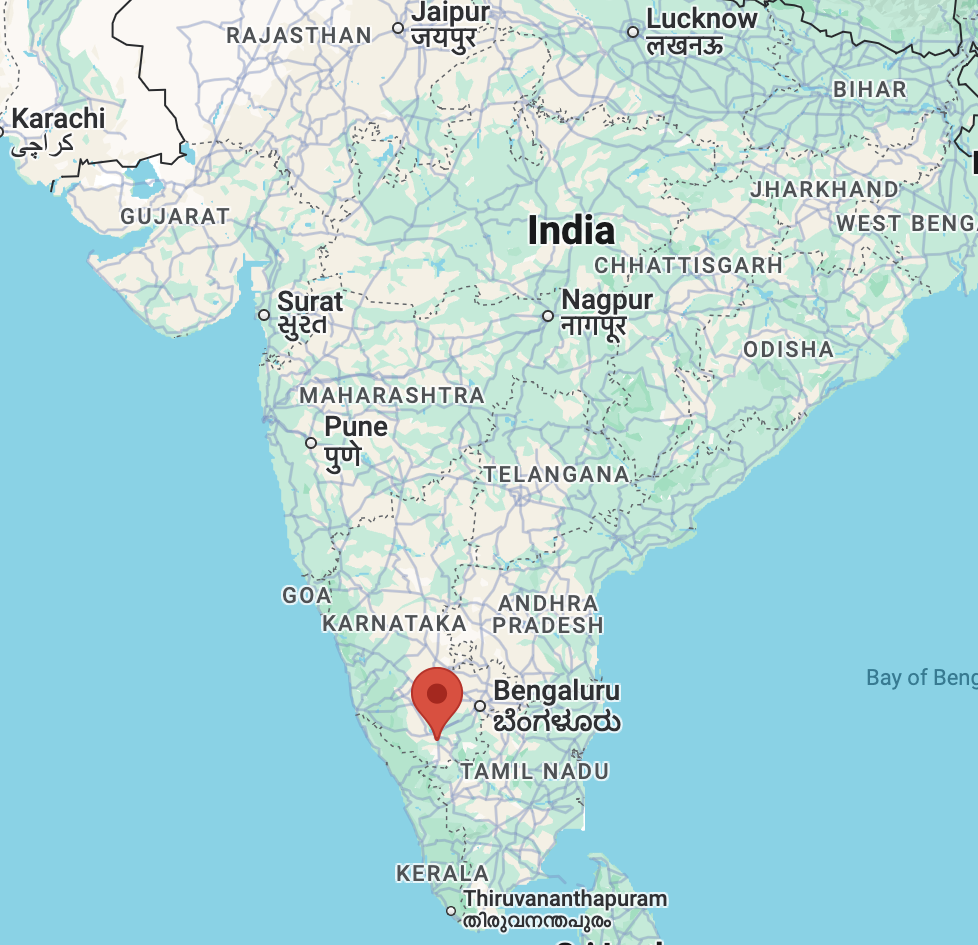
Targets and Study Updates
Strenghtening Health Outcomes through International Collaboration
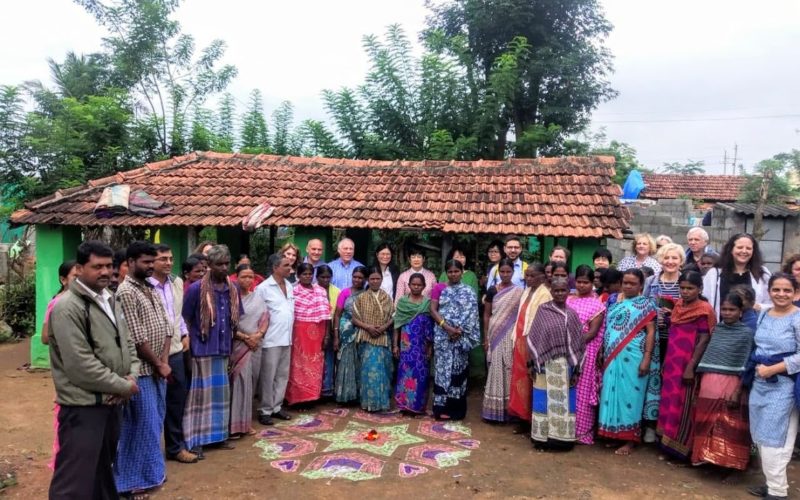
The study benefits from outstanding intellectual and infrastructure resources in India and Canada, built over years of research and community engagement. The Indian and Canadian teams bring together researchers from 18 institutions with complimentary expertise in DOHaD research, intervention cohorts, longitudinal studies, data management and knowledge translation/policy development. These strengths combined with strong collaborations with knowledge users and health policy experts will ultimately allow implementation and scale-up of the most effective interventions.
Collaborative Research
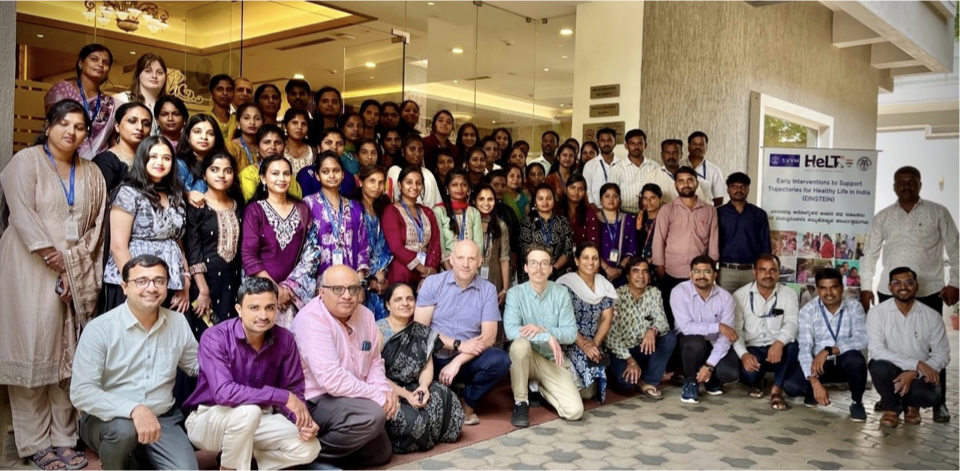
The HeLTI India team retreat in Mysore in 2025. The team now consist of over 70 individuals!
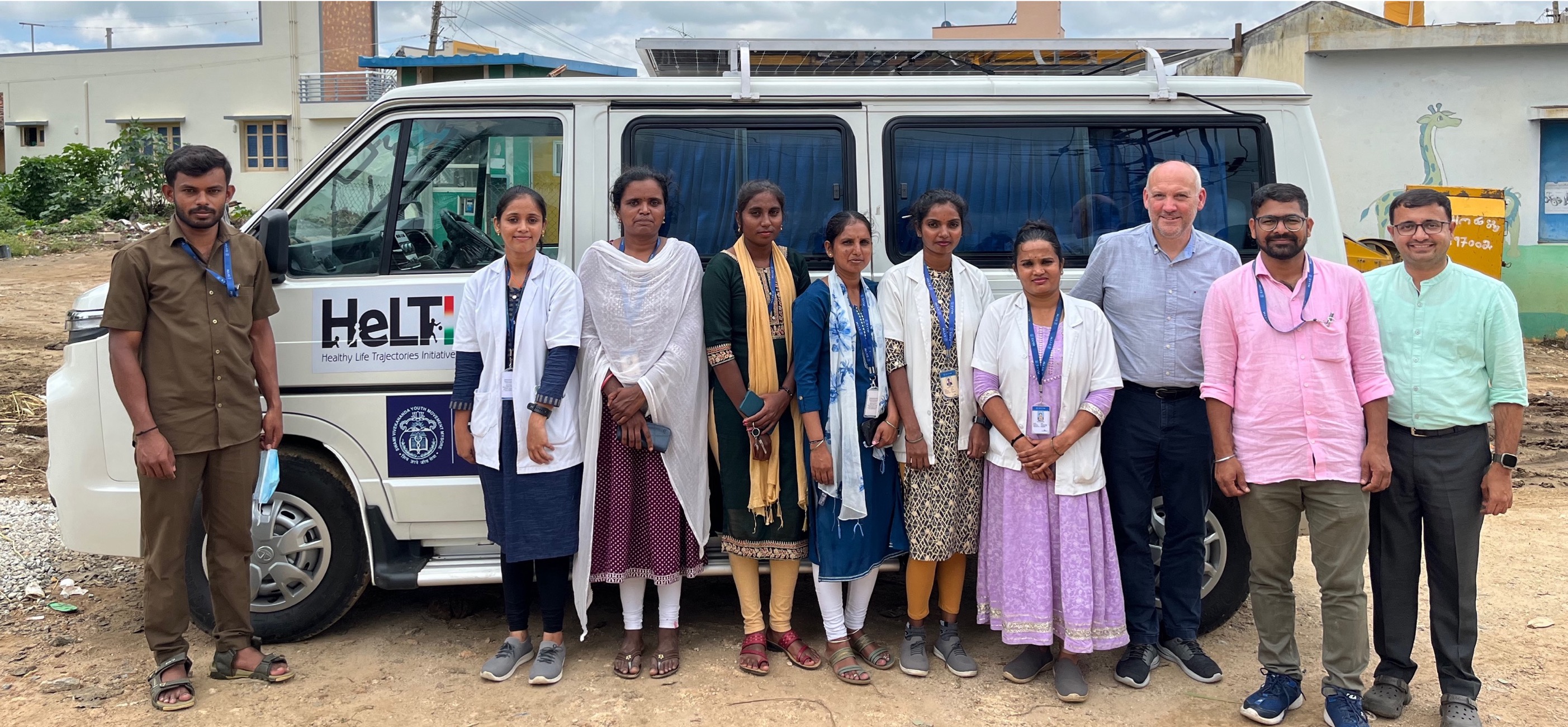
The HeLTI India team working on the field alongside HeLTI PI Dr. Stephen Matthews (HeLTI India) standing in front of the specialized biospecimen vans being used at SVYM. These vans are equipped with solar panels and additional space for staff and have substantially improved the biospecimen collection process. Their advanced features allow for more efficient processing of samples directly in the field, representing a major leap forward in our research capabilities.
HeLTI India PIs
Kalyanaraman Kumaran, DM, FFPH, Stephen Matthews, PhD, FCAHS & Kumar Gavali Suryanarayana, DCH
 |
 |